
It Was Never About the Technology
Why Agentic AI Will Win or Lose in Freight Forwarding Based on Something That Has Nothing to Do with AI



There's a question I've been sitting with for a while now.
Not "Will AI transform freight forwarding?" It will. That race is already run.
The question I can't shake is this:
"Why do some people thrive when new tools arrive and others quietly, almost invisibly, fall behind?"
I've spent years in this industry. Long enough to have watched people cry when their Outlook was upgraded from Office 2007 to 2016. Long enough to have seen a freight forwarder print a document to review it, throw it away, update, print again to check, and finally send when there was a Preview button right next to the Print button the whole time. When I asked why they didn't use it, the answer wasn't laziness. It was: "Nobody ever showed me that."
That's not a technology problem. That's a confidence problem. A trust problem. A human problem.
And if you're building AI for freight forwarding or any complex operational environment and you're not solving for that, you're not actually solving the problem.
The Garmin, the Apple Watch, and the Thing We Got Wrong
Think about how fitness technology motivates people.
The Apple Watch is brilliant for the person who just needs a nudge. Close your rings. Stand up. You did it. A little dopamine hit, a gentle push. It works because it meets people where they are and where they are is: I want to be healthier, but I'm not obsessive about it.
Strava is for the cyclist who wants to know how they stacked up against every other person who's ridden that segment this week. It's social fuel. Competition dressed up as community. The motivation is external: relative performance, public accountability.
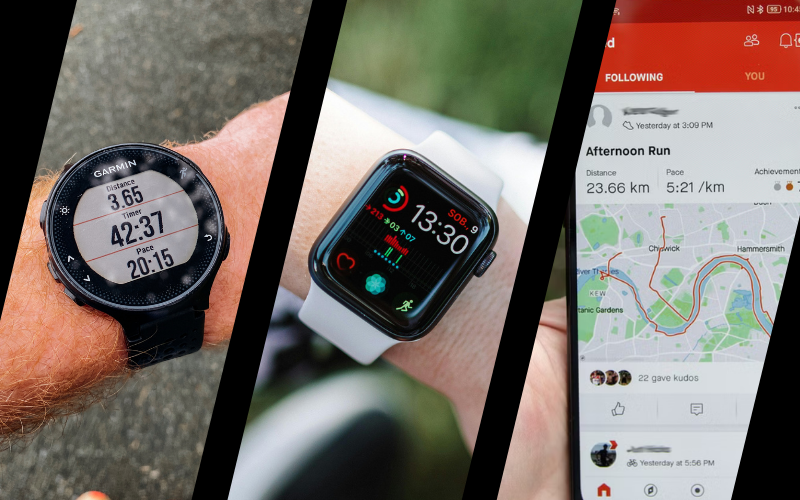
Garmin is what the elite triathlete trusts with their life. Heart rate variability, training load, recovery scores, sleep stages. No hand-holding. No encouragement badges. Just data, dense and precise, for a person who already knows exactly what to do with it.
Same goal. Radically different psychology. Radically different design.
Now ask yourself:
"Why does almost every freight forwarding software platform assume its users are Garmin people?"
What I've Actually Seen
I've seen freight forwarders outsource work to BPO centres in the Philippines and then create a separate workflow task to check that work - something they never did when the same work was being done by a colleague sitting two desks away. Not because the offshore team was worse. Because trust doesn't travel the same way as process.
I've seen companies manage client reports in Google Sheets, copying them to .XLS to protect against edits, where the Google account was owned by a former employee. Nobody flagged it. It just kept working. Until one day it won't.
I've seen people email themselves from their freight software and then forward that email to the client. Not because they're confused. Because that method gives them certainty: I can see it was sent. I can continue the chain. I know where to find it. Their system technically had better options. Those options didn't feel safe.
I've seen practices baked into operations - mandatory double-checks, specific sign-off sequences, rigid handover protocols that exist because of one incident that happened four years ago and has never happened since. The person who remembers why it was implemented has probably left. The ritual remains.
None of this is irrational. All of it is human.
And here's what it tells me:
People don't resist change because they're stupid. They resist it because change has historically made their jobs harder, not easier, and nobody has given them a reason to believe this time is different.
The Identity Shift Nobody's Measuring
Something else has changed that I can't get out of my head.
There was a time when people in this industry said:
"I am a freight forwarder."
Now they say: "I work in freight forwarding."
Read that again. Because the language matters enormously.

"I am" is identity. It's craft. It's pride. It's fifteen years of knowing exactly who to call in Rotterdam at 11pm on a Friday when two containers are sitting on the wharf and penalties are running at $1,000 a day and climbing.
"I work in" is a transaction. A job. Something that happens to you, not something you are.
The industry didn't lose that identity because the people changed. It lost it because the tools stopped reflecting what experienced operators actually know. The systems got more complicated, more fragmented, more compliance-heavy and simultaneously, less legible, less trustworthy, less human.
I'll say something that might be controversial: I could move cargo around the world twenty years ago more easily than I can now. And if something went wrong, I knew who to call and how to fix it. That's not nostalgia. That's an operational reality that software vendors have consistently made worse, not better.
More dashboards. More data. More configuration required before the "intelligent" features turn on. More cognitive load on the people already carrying the most.
Freight Forwarding Is Not Complex. Scale Is.
Here's the thing most vendors get wrong in their pitch decks.
Freight forwarding at its core is not complicated. You're moving cargo from A to B. You're managing documents, compliance, relationships, and timing. The fundamentals haven't changed in decades.
What changed is: Scale. Volume. Regulatory fragmentation. The proliferation of systems that don't talk to each other. The accumulation of rules — many of them legacy patches on top of legacy patches that turned something fundamentally human into something that feels like it requires a systems integrator to understand.
MOSAIC is built on a different premise: the complexity is in the scale. Not in the work. The job of the platform is to absorb the complexity so the operator doesn't have to.
That's not a marketing line. That's a design constraint.
Why Agentic AI Has to Be Different Here
The research on AI adoption in freight forwarding is clear about one thing: the #1 barrier isn't cost. It isn't integration. It isn't trust in the technology.
It's internal expertise. Almost half of freight forwarders cite it as their primary blocker.
Which means if you build an AI that assumes operator expertise, if your agent surfaces raw data and expects the user to know what to do with it, you've built a Garmin for a team of Apple Watch users. And then you've called them stupid for not using it right.
The AI has to carry the expertise, not assume it.
That's why MOSAIC's agentic layer is being built around three distinct AI teammates, each calibrated to a different human. Not a different user tier. A different person.
Same platform. Three humans. Because what motivates and supports one person actively gets in the way of another.
The Real Reason We'll Get This Right
Technology companies love to talk about their tech.
We'd rather talk about the people we're building it for.
We understand why someone emails themselves before forwarding to a client. We understand why spreadsheets live outside the system. We understand why a four-year-old operational ritual is still running because the audit trail matters more than the efficiency. We understand why "I work in freight forwarding" happened and why we want "I am a freight forwarder" back.
Flights don't stop. Vessels don't stop. Supply chains don't sleep. Leave two containers on the wharf on a Friday and you're paying $1,000 on Monday, $1,500 on Tuesday, and explaining it to the client on Wednesday. The penalties for getting it wrong are immediate, unforgiving, and deeply personal.
The people doing this work know that. They've always known that. And for too long, the software they've been handed has acted like it doesn't.
That changes.
Not because Agentic AI is a miracle. But because we're building ours around the humans who will actually use it: their confidence, their instincts, their workarounds, their identity. The gold isn't in the algorithm. It's in understanding why someone printed that document instead of clicking 'Preview'.
We're not just building AI for freight forwarding.
We're building it for freight forwarders.
There's a difference. And that difference is everything.
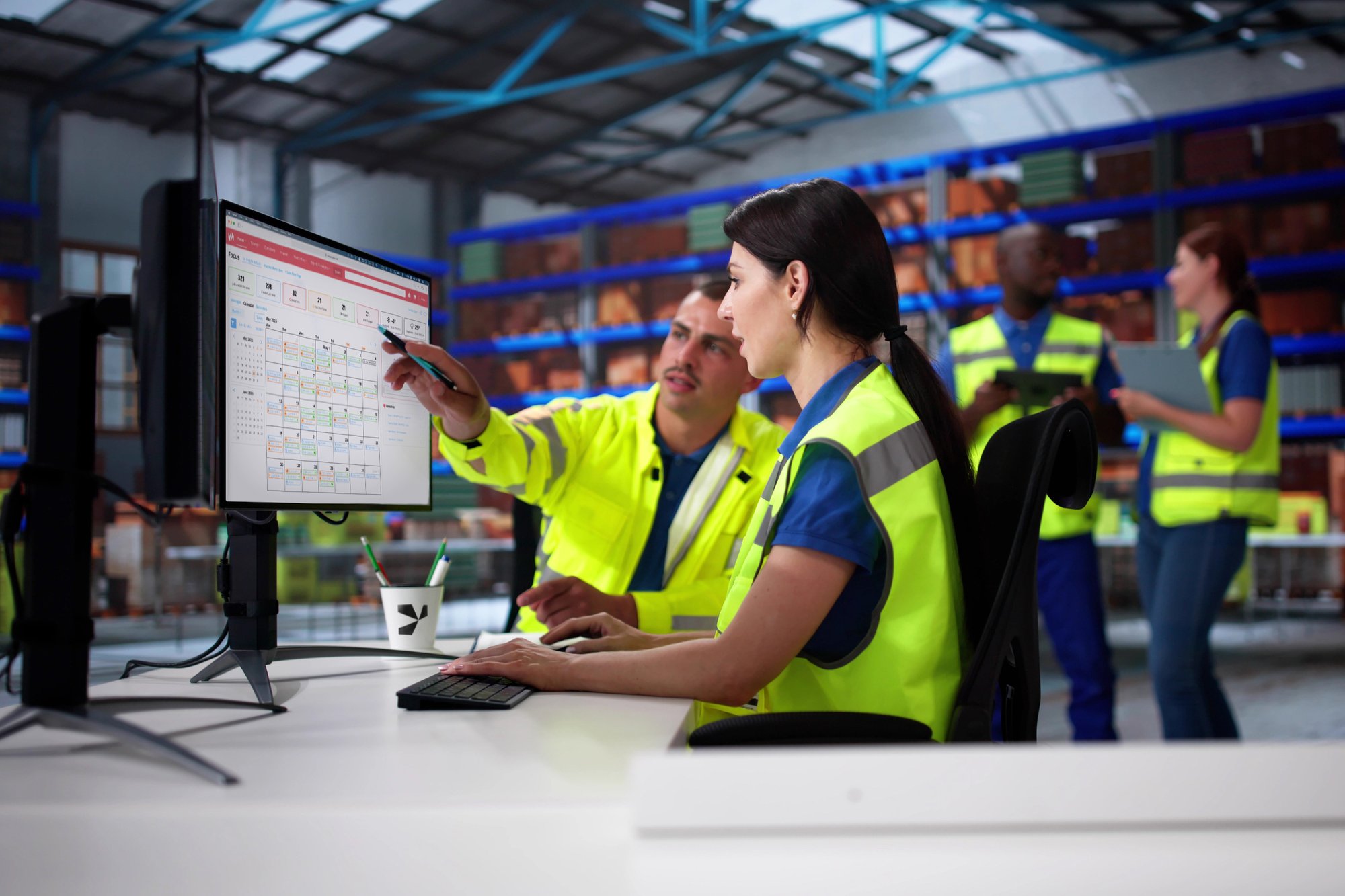

See MOSAIC in action.
Request for a demo now. Simply drop your contact details in the space provided, and we'll reach out to you shortly.
